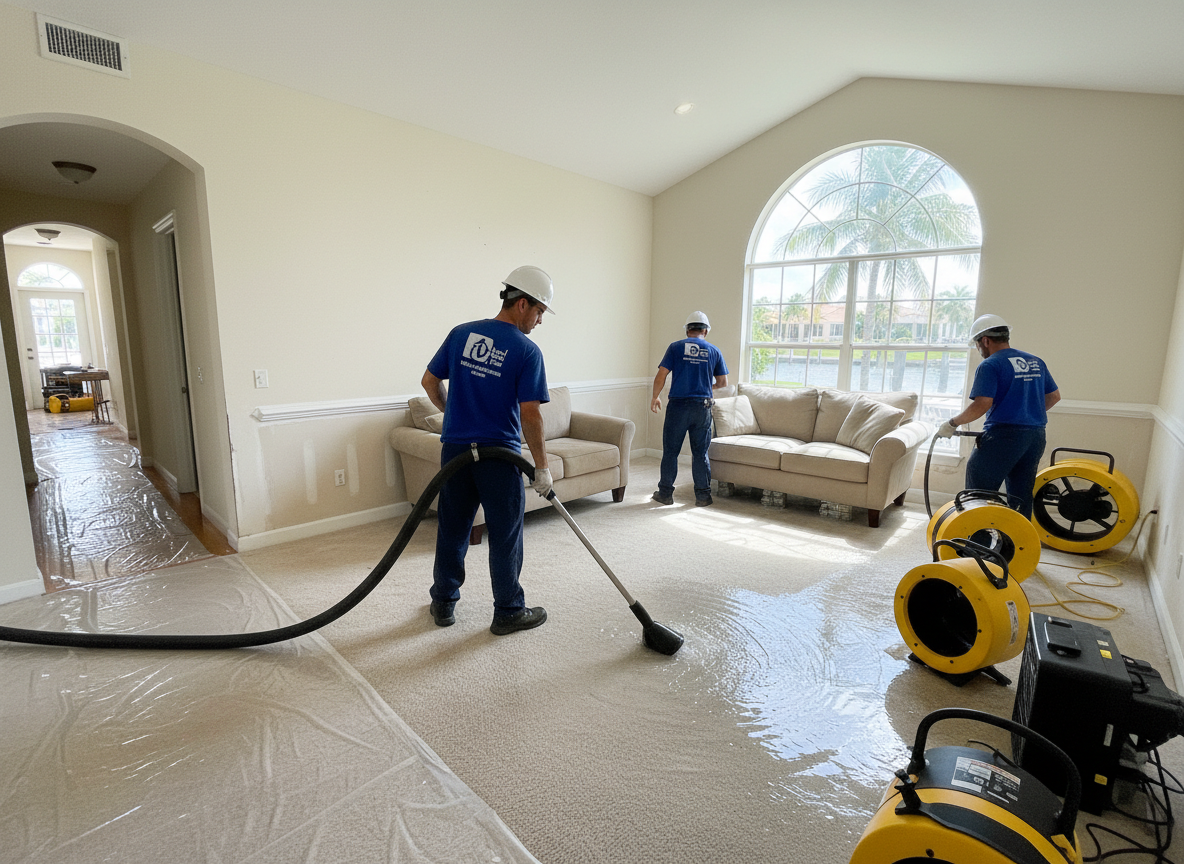
Plantation was built on land that used to be under two or three feet of Everglades water, and the drainage that made the city possible still decides how it floods. Water here often rises from the ground rather than falling through a roof: it comes up through swales, backs out of canals and sits against a slab edge days after the rain has stopped. This page explains how we read a Plantation building before we scope the work.
What should a Plantation homeowner know about water damage?
Plantation covers 21.93 square miles in central Broward County with a 2020 population of 91,750. Before it was drained, the land was Everglades wetland regularly covered by two to three feet of water, and the city takes its name from the Everglades Plantation Company, which tried and failed to establish a rice plantation here. Only 0.87 percent of the city's area is water today, but the water table underneath is never far down.
Built on drained Everglades wetland
A city built on drained wetland has a particular relationship with water. The soil is often organic muck over limestone, the water table sits high, and the ground holds moisture long after a storm. Drainage is not a matter of water running downhill to a river; it depends on a managed system of swales, canals and retention areas moving water out at a controlled rate. When that system is full, water has nowhere to go and rises where it stands. That is why a Plantation garage floor can be damp for a week while the street looks dry, and why a slab edge is often the first place a problem shows.
Subdivisions from the 1950s onward
Most of the city's housing was built after the Second World War, in subdivisions that spread west from the Fort Lauderdale edge toward Sunrise and Davie. The typical house is a single-storey block ranch on a slab, with a low-pitch roof, a carport or garage, and a pool or a screened patio at the back. Many have been extended, re-roofed and re-plumbed at least once. Original drain lines, pool equipment pads, irrigation systems and roof edges are the components we find failing most often, and each of them can put water into a wall that looks sound from inside.
Swales, canals and retention areas
Plantation drains through a network that includes roadside swales, canals and retention lakes, and many properties sit close to one of them. A swale is designed to hold water temporarily and let it soak away, which works until the ground is saturated and the canal downstream is already high. Then the swale becomes a shallow channel that carries water to the lowest point, which may be a driveway or a wall base. A retention area that is full after a storm can also back water toward the lots around it. When we scope a job here we ask where the nearest swale or canal sits relative to the floor level, because that answers a lot about how the water arrived.
Who serves a Plantation address
Plantation is its own municipality, so building permits and local drainage questions run through the city. Broward County publishes the flood maps used for insurance and runs countywide emergency management, and the regional canal and drainage network is managed at the water management district level. Where a swale or canal is the source, the responsible office may be the city or the district. We document the building and point you to the office that owns the record.
What does a Plantation property need?
Three patterns account for most calls here: groundwater and swale backup at a slab edge, roof and window intrusion during a storm, and growth in a wall or cabinet base that stayed damp afterwards. The drainage around the house matters as much as the building itself.
- Water restoration covers extraction, drying and the repairs that follow. In Plantation the first question is often whether the water rose from the ground or came through the building, because the two produce different contamination and different cleanup.
- Storm damage covers wind-driven rain at roof edges, pool enclosures and window openings, with leak detection included so the path is found before a wall is opened.
- Mold remediation applies where a cavity or cabinet base has stayed damp long enough for growth. Containment and removal come before any source correction.
A house near a full canal often needs storm damage and water restoration together, and remediation if the wall stayed wet for weeks. The scope separates them so nothing is priced twice.
Why choose a Fort Lauderdale crew in Plantation?
Our base at 708 SE 32nd St in Fort Lauderdale is about six miles from Plantation, and the post-war ranch housing here is the stock we read most often: block walls, slab floors, low-pitch roofs and pools with equipment pads against the house. We read moisture before removal, write the scope before work starts and say plainly when a source repair belongs to a plumber, a roofer or a pool contractor. This site does not publish licence numbers, certifications or customer reviews, and we will not invent them to fill a page.
Why Plantation water damage should not wait
On drained wetland, water leaves slowly. The ground holds it, the swales hold it and the canals hold it, so a house that takes water at a slab edge on Saturday can still be wet at the wall base on Thursday. In this climate, damp block and damp drywall do not dry on their own, and the humidity inside a closed house keeps them damp. Hurricane season runs from June through November, and the storms that cause the most damage here are often slow systems that drop rain for a day rather than a named hurricane. The cost of waiting is material: baseboards, drywall, cabinet bases and flooring that could have been dried are removed and replaced instead.
What should a Plantation homeowner check before the rainy season?
On drained wetland, water leaves slowly and the ground stays high. Four checks suit a slab ranch with a pool and a landscaped lot.
Look at the swale and the low corner of the lot. Check that the swale in front of the house has not been filled with soil or mulch, that a new fence or shed has not blocked the path water takes, and where the lowest corner of the lot sits relative to the slab.
The pool and the equipment pad. A pool that overflows after rain sends water toward the house, and a pump or filter pad below the pool water line can leak into the ground beside the slab. Check the overflow route, the backwash line and the condition of the pad.
Irrigation and the air handler. A stuck irrigation valve can run for hours unnoticed, and a condensate line from an air handler in the attic or a closet can block and stain a ceiling. Both are small failures that put water inside a wall.
Roof edges and the garage floor. Low-pitch roofs, valleys and the garage slab edge are where the first sign usually appears. A garage floor that is still damp a week after rain is rarely condensation. In most cases it is the water table, or a swale that is not moving water away.
If any of those checks shows a problem, the next step is measurement rather than guesswork. Moisture readings at the slab edge, the wall base and the ceiling tell you whether the water is recent or has been sitting, and that changes what the job involves.
How a Plantation job runs, step by step
Every job starts with the direction the water came from, then moves through drying and documentation to a written hand-off.
- Call and describe the water. Say whether it rose from the ground, backed out of a canal or swale, or came through the roof or a window. We explain what to keep clear and what to shut off if it is safe.
- Read the building. Moisture readings at marked points, a thermal scan where a wall or ceiling is suspect, and a dry reference of the same material for comparison.
- Stop the source and protect the rooms. Water is shut off where it is safe, contents move clear, and containment goes up where growth or contamination is present.
- Extract, remove and dry. Standing water and saturated material come out, then air movers and dehumidifiers run against daily readings.
- Verify and hand back. Final readings are compared with day one, and repairs that belong to a plumber, roofer, pool contractor or general contractor are listed in writing.
What's included on a Plantation job:
- A written scope separating emergency water work from permanent repairs
- Moisture readings at marked points, photographed and repeated at the same locations
- Extraction of standing water and removal of saturated pad, carpet or drywall
- Air movers, dehumidifiers and cavity drying suited to block walls and slab floors
- Containment and HEPA filtration where growth is present or likely
- Photographs and a moisture log for an owner, landlord or insurer
- A hand-back walkthrough with day-one and final readings side by side
What's the next step in Plantation?
Call (954) 707-5047 and describe the water: where it is, when it appeared and whether it rose from the ground or came from above. We will tell you what to keep clear, what to shut off if it is safe, and what the first visit will involve. If the source is a canal, a roof or a plumbing line, we will say so before you book.
Around Plantation
We regularly work near:
- 📍Broward Mall
- 📍Plantation Preserve
- 📍Sunrise Boulevard
- 📍University Drive
- 📍Lauderhill
- 📍Fort Lauderdale
Mold Remediation in Plantation — Local Notes
- •2020 population 91,750; 21.93 square miles
- •Built on drained Everglades wetland once covered by two to three feet of water
- •Only 0.87 percent of the city's area is water