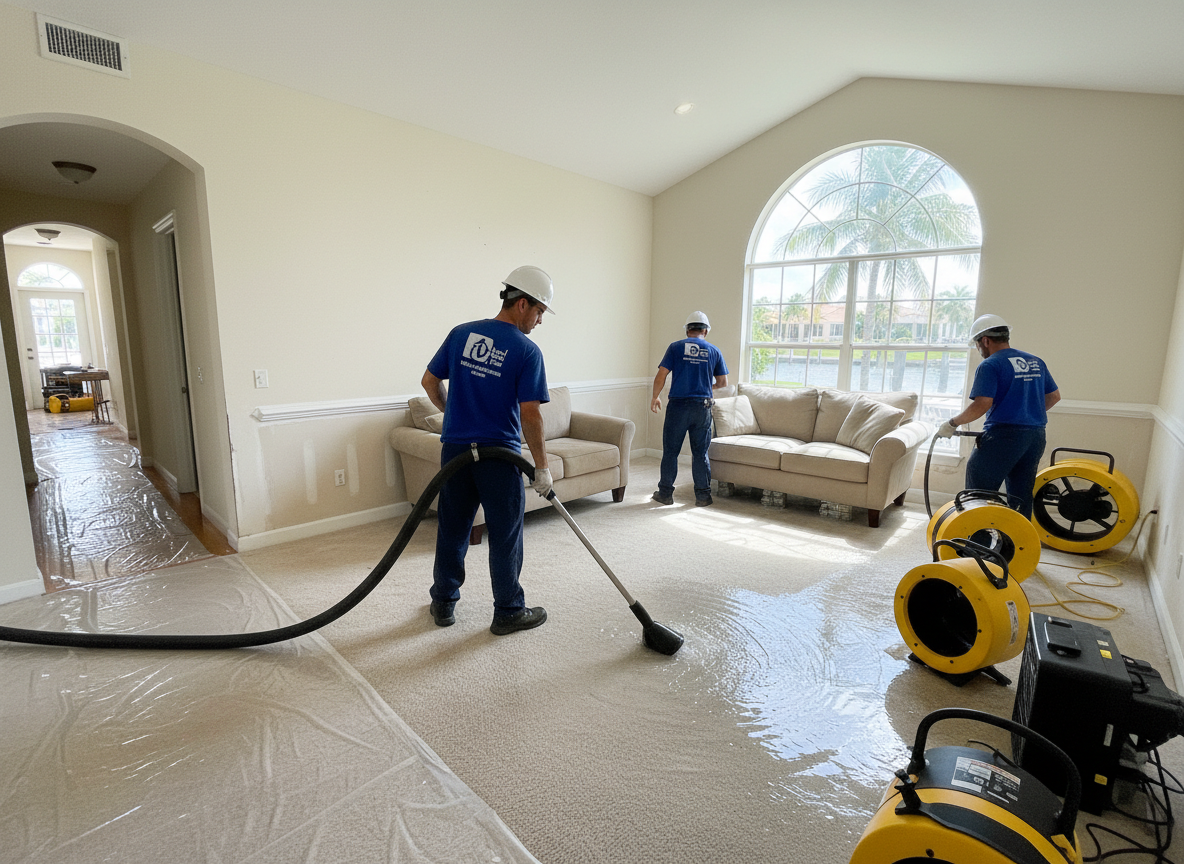
Hollywood is large enough to contain several different water problems inside one city boundary. A canal-front house in the lakes area, a 1950s ranch west of the rail line and a beachside condo on A1A can all flood in the same storm, for three different reasons. This page explains how we read a Hollywood building before we scope the work.
What should a Hollywood homeowner know first?
Hollywood covers 30.8 square miles in southeastern Broward County, with a 2020 population of 153,067 — the third-largest city in the county. About 11.23 percent of its area is water, and it includes roughly five to six miles of Atlantic beach, interrupted briefly by a section deeded to Dania Beach.
A planned 1920s city with two waterfronts
Hollywood was laid out in the 1920s as a planned community, with two yacht basins dredged and connected to the Intracoastal Waterway. That design gave the city two waterfronts — the ocean on one side and the Intracoastal and its canal system on the other — and a street grid that still shapes where water goes. The lakes area carries canals and lake frontage, and a lot that backs onto one drains toward it rather than away. During heavy rain, the canals rise while the rain is still falling, so a property can take water from the rear while the street in front is clear.
Housing from the 1920s boom to post-war subdivisions
The city's housing spans a century. There are 1920s and 1930s houses near the historic core, post-war block ranches in the subdivisions that filled in during the 1950s and 1960s, and mid-century and later condo buildings along the beach and the Intracoastal. By 1960 the city already had more than 2,400 hotel units and 12,170 single-family homes. That range matters because each era fails differently: original cast-iron drains and galvanised lines in the oldest houses, low-pitch roofs and carports in the post-war stock, and shared plumbing chases and flat roofs in the beachside buildings.
Beachside and inland are not the same problem
On the barrier side, water arrives from the ocean and the Intracoastal: storm surge, king tides and wind-driven rain against windows and balcony doors. Inland, the problem is rainfall that cannot infiltrate, plus canal backup where the drainage system is already full. A beachfront building can take salt water at a garage level while a house two miles inland takes clean rain through a roof edge on the same afternoon. The two need different documentation, different material decisions and, often, different trades after we leave.
Who serves a Hollywood address
Hollywood is its own municipality, so building permits and local drainage questions run through the city. Broward County publishes the flood maps used for insurance and runs countywide emergency management, and the regional canal and drainage network is managed at the water management district level. In a condo or a building on the beach, an association may also control access and work hours. We document the building and point you to the office that owns each record.
What does a Hollywood property need?
The city's size means the answer changes street by street. Beachside buildings need surge and wind-driven rain handled, canal-front houses need rising water documented, and inland post-war homes need roof-edge leaks and rainfall intrusion read properly.
- Water restoration covers extraction, drying and the repairs that follow, whether the water came from a canal, a roof or a supply line. The first step is always the same: find the boundary of what is wet.
- Storm damage covers wind and rain intrusion at roofs, balcony doors, windows and lanai ties, with leak detection included so the entry point is identified before material is removed.
- Mold remediation applies where a wall, ceiling or cabinet base has stayed damp long enough for growth. Containment and removal come first, then the source.
A beachside job often needs all three, in that order, across a single season. An inland job is usually one service plus a hand-off.
Why choose a Fort Lauderdale crew in Hollywood?
Our base at 708 SE 32nd St in Fort Lauderdale is about six miles from Hollywood, and we work across the range of building stock the city contains: 1920s houses with original drains, post-war block ranches and multi-storey buildings near the beach. We read moisture before removal, write the scope before work starts and name the trade that owns a source repair. On a condo or association building we plan access, containment and material routes before the crew arrives. This site does not publish licence numbers, certifications or reviews, and we will not invent them.
Why Hollywood water damage gets worse quickly
A city with 11.23 percent of its area in water has a lot of edge to flood. When canals and the Intracoastal rise during a storm, water reaches lots that drain toward them long before it reaches the street, and a wall base that takes water from behind a house can stay damp for weeks. Inland, the same storm leaves rainfall standing on ground that is already saturated. Meanwhile the indoor conditions that follow are ideal for growth: air conditioning keeps surfaces cool, humidity stays high and any wet material is slow to dry. Hollywood also has a large share of older housing, where original drain lines and roof edges are already at the end of their service life. A small failure in a 1950s house in July can become a remediation job by August.
What should a Hollywood homeowner check before the next storm?
The answer depends on which side of the city the property sits. On the barrier island the threat is surge, king tides and wind-driven rain. Inland in the lakes area it is canal levels and rainfall that cannot drain.
Beachside: openings and the roof. In a 1950s or 1960s building near the beach, the flat roof, the parapet and the window and door openings take the weather first. Check that sealant at the parapet and around openings is intact, that roof drains are clear, and that storm shutters or impact coverings are present and fit. Salt air ages metal fixings and flashing faster than inland.
Inland: the canal behind the lot. In the lakes area a lot that backs onto a canal drains toward it, and during a slow storm the canal rises while rain is still falling. Check that the rear of the lot is not lower than the water line, that the pool or patio deck drains away from the house, and that a new fence has not blocked a swale.
In both: the plumbing's age. A 1920s house near the historic core may still have cast iron or galvanised lines. A post-war ranch may have original drains under a slab. Slow drains, a stained ceiling below a bathroom, or a water bill that creeps up are worth a look before the season rather than after it.
Know where to shut the water off. City water enters at a meter and a valve, and a house that has been extended may have more than one shutoff. Find the one that stops the whole house and make sure it turns.
Water in Hollywood often arrives from the rear of the lot or from the roof rather than the street, so check the sides of the property most people never look at.
How a Hollywood job runs, step by step
Every job starts with where the water came from, then moves through drying and documentation to a written hand-off.
- Call and describe the water. Say whether it came from the canal, the ground, a roof, a balcony or a fixture, and how long it has been there. We explain what to keep clear and what to shut off if it is safe.
- Read the building. Moisture readings at marked points, a thermal scan where the wall or ceiling is suspect, and a dry reference of the same material for comparison.
- Stop the source and protect the rooms. Water is shut off where it is safe, contents move clear, and containment goes up where growth or contamination is present.
- Extract, remove and dry. Standing water and saturated material come out, then air movers and dehumidifiers run against daily readings.
- Verify and hand back. Final readings are compared with day one, and repairs that belong to a plumber, roofer or general contractor are listed in writing.
What's included on a Hollywood job:
- A written scope separating emergency water work from permanent repairs
- Moisture readings at marked points, photographed and repeated at the same locations
- Extraction of standing water and removal of saturated pad, carpet or drywall
- Air movers, dehumidifiers and cavity drying suited to the building's age and construction
- Containment and HEPA filtration where growth is present or likely
- Photographs and a moisture log for an owner, association or insurer
- A hand-back walkthrough with day-one and final readings side by side
What's the next step in Hollywood?
Call (954) 707-5047 and describe the water: where it is, when it appeared and whether it came from the canal, a wall or above. We will tell you what to keep clear, what to shut off if it is safe, and what the first visit will involve. If the source is a roof, a balcony or a plumbing line, we will say so before you book.
Around Hollywood
We regularly work near:
- 📍Hollywood Beach
- 📍Intracoastal Waterway
- 📍Downtown Hollywood
- 📍Dania Beach
- 📍Fort Lauderdale
- 📍Hallandale Beach
Mold Remediation in Hollywood — Local Notes
- •2020 population 153,067; third-largest city in Broward County
- •About 11.23 percent of the city's area is water
- •Includes roughly five to six miles of Atlantic beach